


For tax year 2026, third-party payment networks generally must issue a Form 1099-K only when you receive more than $20,000 in gross payments and have more than 200 transactions. Payment-card processors follow a separate rule with no dollar or transaction minimum. Either way, you must report your business income whether or not a form ever lands in your inbox.
TL;DR:
- The federal reporting threshold for third-party settlement organizations in 2026 is over $20,000 in gross payments and more than 200 transactions, both conditions must be met.
- Payment-card processors have no minimum dollar or transaction thresholds, which means even a single cent paid by card can trigger a 1099-K.
- The form reports gross revenue without deductions, so small business owners must reconcile platform statements and adjust for fees and refunds to determine actual income.
- States may require 1099-K reporting at lower thresholds than the federal rule, so sales below federal limits can still generate forms in some jurisdictions.
- Proper recordkeeping and reconciliation prevent errors and double-counting, which are common pitfalls when handling multiple platforms and forms.
Table of Contents
- What the 2026 TPSO threshold is and where the IRS states it
- Payment-card reporting vs TPSO reporting: which applies to your payments
- What Form 1099-K reports and why gross vs net matters for your books
- If you receive a 1099-K: recipient steps and how to report the amounts correctly
- Filing, furnishing, and e-file deadlines filers must observe
- State thresholds and edge cases: when you might still get a 1099-K
- Practical accounting checklist and how a virtual accounting partner can help
- Thresholds are visibility rules, not permission slips
- Get help reconciling your 1099-K and filing with confidence
- FAQ
- Sources
What the 2026 TPSO threshold is and where the IRS states it
The rule sounds simple once you see it written out: a third-party settlement organization, or TPSO, generally must send you a Form 1099-K only when both conditions are met in the same calendar year, more than $20,000 in gross payments and more than 200 transactions. Miss either number and the TPSO isn’t federally required to file.
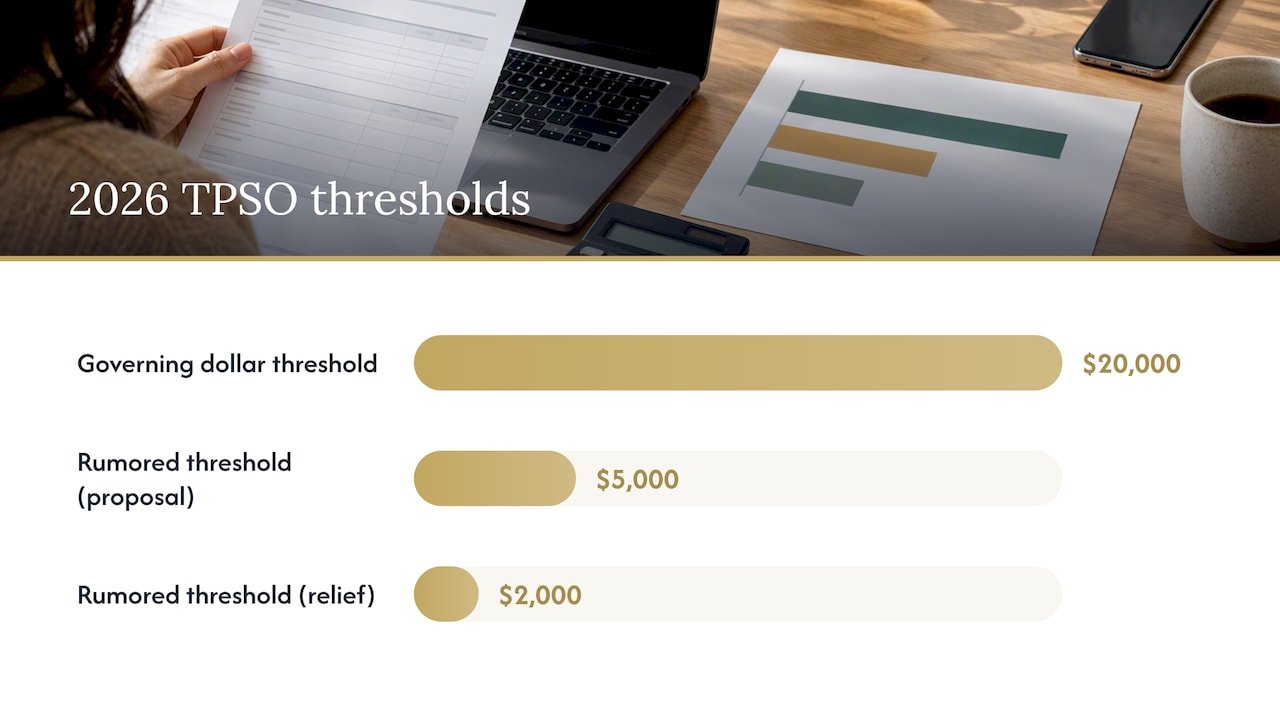
This $20,000/200-transaction combination is the threshold Congress restored after a few years of lower proposed limits circulated in budget proposals and early guidance. You may have seen rumors online about a $2,000 or $5,000 threshold. Those figures came from transitional relief periods and proposed phase-ins that never took full effect at that level; the number that actually governs 2026 reporting is $20,000 and 200 transactions, both required.
A few things to keep straight about how this threshold actually works:
- It applies specifically to TPSO third-party network transactions, payment apps and online marketplaces that settle funds between buyers and sellers.
- It does not override or replace payment-card processor rules, which operate on an entirely different standard.
- Platforms are allowed to voluntarily issue a 1099-K even when you fall below the $20,000/200 mark, so a smaller volume of sales doesn’t guarantee you’ll avoid paperwork.
- The threshold is a visibility mechanism, not a tax rule: it changes who the IRS automatically hears about, never whether your income counts as taxable.
That last point matters more than most sellers realize. The dollar figure decides who gets flagged for cross-checking, not who owes tax. Your obligation to report income exists independent of any form.
Payment-card reporting vs TPSO reporting: which applies to your payments
Not every payment you receive flows through the same reporting rule, and mixing up the two categories is where a lot of confusion starts.
Payment-card processors handle transactions run through a credit or debit card, think a card swipe at a pop-up booth or a card-on-file charge through a merchant account. According to the IRS Form 1099-K FAQs, payment-card transactions carry no federal minimum dollar or transaction threshold at all. A single one-cent payment-card transaction can technically trigger a 1099-K.
TPSOs are different: payment apps and online marketplaces that settle funds between third parties, think a payment app transfer for selling a used couch or marketplace payouts for an online shop. These follow the $20,000/200-transaction test described above.
Because the rules diverge this sharply, you can receive a 1099-K well below the federal TPSO threshold for reasons that have nothing to do with that $20,000 figure:
- Your payments ran through a payment-card processor rather than a TPSO, where no de minimis applies.
- Your state sets a lower reporting threshold than the federal rule (more on that below).
- The platform chose to voluntarily report your activity even though it wasn’t obligated to.
- Backup withholding applied to your account, which can trigger additional reporting regardless of volume.
Knowing which category your payments fall into helps you predict whether a form is coming and avoid being blindsided in late January.
What Form 1099-K reports and why gross vs net matters for your books
The number on your 1099-K is almost never the number you actually earned, and that gap trips up more small business owners than the threshold itself does.
Box 1a reports gross payment-card and third-party network transactions, with no deductions for processing fees, refunds, chargebacks or shipping costs collected from buyers, according to the 1099-K instructions. Box 3 reports your transaction count for the year, and the 2026 revision of the form adds new boxes covering cash tips and tipped occupation codes for applicable filers.
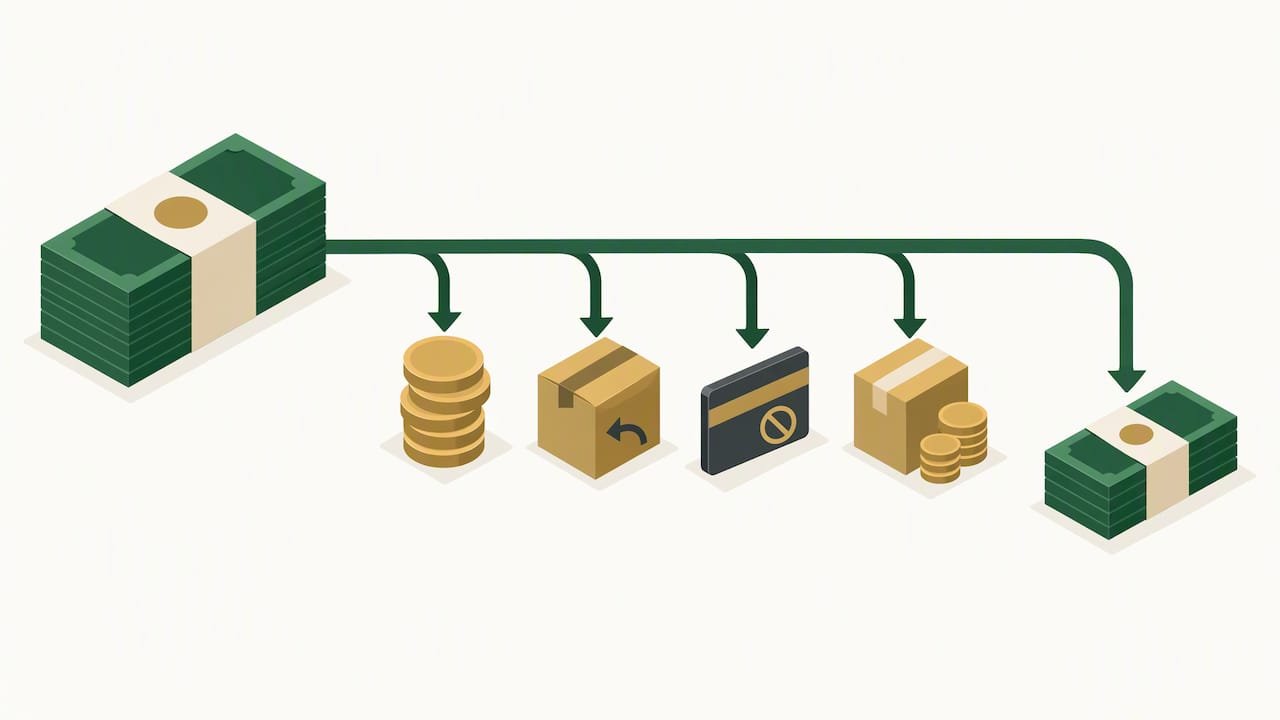
That “gross” figure can overstate your real revenue by a meaningful margin once you factor in platform fees, refunded orders and shipping charges passed through to customers. If you report the 1099-K number directly as income without adjusting for those items, you risk paying tax on money you never actually kept.
A short reconciliation checklist keeps this from becoming a year-end scramble; for example, using tools to simplify invoicing and payments can help you capture gross sales accurately.
- Pull year-end statements from every payment processor and platform you sold through.
- Match each platform’s gross total to your own sales ledger, transaction by transaction where possible.
- Separate out processing fees, refunds and shipping collected so you can net them against gross receipts.
- Adjust your bookkeeping entries to reflect net revenue, keeping the gross figure documented for comparison to the 1099-K.
- Flag any forms that don’t match your internal records for follow-up with the platform before filing.
Pro Tip: Keep a running monthly log of gross sales by platform rather than waiting until January. Reconciling twelve small batches is far easier than untangling a year of transactions at once.
If you receive a 1099-K: recipient steps and how to report the amounts correctly
Getting a 1099-K in the mail or your inbox doesn’t mean the form is automatically correct, and it doesn’t tell you which line of your tax return it belongs on. A short sequence of checks protects you from both overreporting and underreporting.
- Confirm the filer’s name, address and taxpayer identification number match the platform you actually used, since payment processing can run through an intermediary with a different legal name.
- Reconcile the gross amount and transaction count against your own processor statements and bank deposits before you touch your tax return.
- Report the income on the correct form for your entity type. Sole proprietors typically use Schedule C, while partnerships, S corporations and other entities report through their own applicable returns, per IRS guidance on what to do with Form 1099-K.
- If you received multiple 1099-Ks covering overlapping sales, such as a marketplace and a payment processor both reporting the same transaction, reconcile carefully so you don’t count that income twice.
- If a form looks wrong, contact the filer listed on the form directly to request a correction before filing, since amending after the fact is more work for everyone involved.
Sole proprietors selling through several platforms at once are the group most likely to double-count income by accident, simply because each form arrives in isolation without any built-in cross-check.
Filing, furnishing, and e-file deadlines filers must observe
Platforms and payment processors work against a fixed calendar, and knowing it helps you predict when paperwork should show up and when to flag something missing.
- Filers must furnish your copy of the 1099-K by January 31 of the year following the reporting year.
- The deadline to file with the IRS is February 28 for paper returns and March 31 for electronic filing, according to the IRS third-party filer FAQs.
- Filers submitting 10 or more information returns in a year generally must file electronically rather than on paper.
- Backup withholding on third-party network transactions, clarified in final regulations published in the Federal Register, can create an additional Form 945 filing obligation for the platform, and it adds penalty exposure for errors.
- Filers who fail to file or furnish accurate returns on time risk penalties under sections 6721 and 6722 of the tax code.
If you haven’t received an expected form by early February, that’s the moment to reach out to the platform rather than waiting for your own filing deadline to close in.
State thresholds and edge cases: when you might still get a 1099-K
Federal rules set a floor, not a ceiling, and several states require 1099-K reporting at thresholds well below the federal $20,000/200 test. If your state sets a lower bar, a platform operating there may issue you a form even though your sales never approached the federal threshold.
A handful of situations commonly trip up sellers who assume the federal rule is the only one that matters:
- Ticketing platforms that resell event tickets often report smaller transaction volumes than typical marketplace sellers.
- Merchant acquirers and electronic payment facilitators sometimes file under rules distinct from the TPSO framework entirely.
- Hybrid platforms that process both payment-card and third-party network transactions may issue forms based on whichever rule applies to the specific payment type.
Because state thresholds change and vary by jurisdiction, keep your own platform records regardless of what any single form shows, and check your state’s specific guidance or ask an accountant when your sales sit anywhere near a reporting line.
Practical accounting checklist and how a virtual accounting partner can help
A few habits prevent most 1099-K headaches before they start. Reconcile your platform statements monthly instead of annually. Retain every processor fee report alongside your sales ledger. Tag personal sales separately from business sales the moment they happen, not months later. Cross-check any overlapping forms from multiple platforms against a single master ledger so nothing gets counted twice.
This is exactly the kind of recurring, detail-heavy work our bookkeeping and accounting services are built around. Some bookkeeping and tax preparation services help reconcile platform statements against books, request corrected forms when a 1099-K doesn’t match reality, and plan estimated tax payments around income that may not show up on any form at all. Our tax preparation and filing work picks up where reconciliation leaves off, turning a stack of platform statements into a return that reflects what you actually earned.
Thresholds are visibility rules, not permission slips
The $20,000/200-transaction line gets treated like a finish line, something to stay under so the IRS never finds out about a side hustle. That framing misses the point entirely. The threshold decides who gets an automatic paper trail, not who owes tax. Income from selling goods or services is taxable the moment you earn it, form or no form.
What actually protects you is boring, consistent bookkeeping: track gross sales as they happen, reconcile against processor statements monthly, and keep fees and refunds in a separate column instead of buried in a lump deposit figure. Most of the 1099-K confusion sellers run into traces back to a single cause, no habit of recordkeeping until a form forces the issue in January.
If you’re staring at a 1099-K that doesn’t match your records, or you’re not sure which boxes matter for your return, that’s the moment to bring in a tax professional rather than guessing.
— Kelli
Get help reconciling your 1099-K and filing with confidence
We built our accounting services around exactly this kind of recurring reconciliation work, so you’re not trying to untangle platform statements alone every January.

Our bookkeeping and accounting services cover monthly reconciliation, fee and refund tracking, and the kind of ongoing recordkeeping that makes 1099-K season a non-event instead of a scramble. When tax time arrives, our tax preparation and filing team takes those reconciled books and turns them into an accurate return, including requesting corrected forms when a platform’s numbers don’t match yours.
A typical engagement pairs monthly bookkeeping with annual tax prep, so records stay current all year rather than getting rebuilt from scratch every spring. Selling across several platforms or picking up gig income on the side can make it helpful to catch double-counted forms and missed deductions before they become a problem.
Ready to stop guessing at your 1099-K numbers? Schedule a consultation and we’ll walk through your specific reporting situation together.
This article is general information, not a substitute for advice from a qualified financial advisor. Consult a qualified financial professional about your own circumstances before acting on anything here.
FAQ
How much can you sell on eBay before you get a 1099 in 2026?
Under the federal TPSO rule, a marketplace like eBay generally must issue a Form 1099-K once you exceed $20,000 in gross payments and more than 200 transactions in the same year. Some states set lower thresholds, and platforms may voluntarily report below the federal limit, so you could still receive a form with smaller sales volume.
What is the IRS threshold for 1099-K?
For 2026, the federal threshold for third-party settlement organizations is more than $20,000 in gross payments and more than 200 transactions, with both conditions required in the IRS’s own guidance. Payment-card processors follow a separate rule with no federal dollar or transaction minimum at all.
Has the IRS restored the $20,000 and 200 transaction threshold for 1099-K forms?
Yes, the $20,000 and 200-transaction combined test is the threshold that governs TPSO reporting for 2026, reversing the much lower figures that were proposed in earlier phase-in plans. This is confirmed directly in the IRS’s 1099-K FAQs.
How much can you make in 2026 without a 1099?
There’s no income level at which you’re exempt from reporting taxable business income. You must report earnings whether or not you receive a Form 1099-K, since the threshold only determines whether a platform is required to notify the IRS, not whether the income itself is taxable.
Sources
- Understanding your Form 1099-K | Internal Revenue Service
- Backup Withholding on Third-Party Network Transactions (Federal Register)