


Seven reports give you everything you need to run a small business with confidence: the income statement, cash flow statement, balance sheet, budget vs actual, a rolling cash forecast, accounts receivable aging, and a short KPI summary. Together they tell you what you earned, what you own, what you owe, and whether tomorrow’s cash will cover tomorrow’s bills. We’ll walk through what each one shows, how to build them on a simple monthly cadence, and which tools keep them accurate without adding work to your week.
TL;DR:
- A rolling cash forecast should project 4 to 13 weeks ahead, while a separate cash flow statement records actual receipts and payments.
- Check cash weekly, review full reports monthly, and revisit strategy and budgets quarterly after reconciling accounts and explaining major variances.
- Keep the KPI set to four to six measures, pairing financial indicators such as margins with operational measures tied to business goals.
- Accounts receivable aging groups unpaid invoices as current, 30 days, 60 days, or 90 days or more, revealing slow payers and collection problems.
- Retailers can add inventory tracking, and service firms can add job profitability reports; burn rate matters when a business is spending down cash reserves.
Table of Contents
- The core reports every small business should track
- How to prepare a monthly management report without an FP&A team
- Which KPIs and nonfinancial metrics actually matter
- Keeping your reports current and trustworthy
- What we see most often, and the fastest fix
- How KelliWorks sets up reporting that runs itself
- FAQ
- Sources
The core reports every small business should track
Each report answers a different question about your business, and skipping one usually means a blind spot shows up later as a cash crunch or a missed tax deadline.
- Income statement (profit and loss): This shows revenue, expenses, and net profit over a period. It tells you whether the business is actually making money, not just moving it around.
- Cash flow statement: This tracks cash actually received and paid out, separate from accrual profit. A business can show a profit on paper and still run out of cash if customers pay late.
- Cash flow forecast: This is a forward-looking projection, usually 4 to 13 weeks, that flags a cash shortage before it happens rather than after.
- Balance sheet: This is a snapshot of assets, liabilities, and equity on a given date. The SBA recommends starting with a balance sheet because it is the foundation for tracking solvency and working capital.
- Budget vs actual: This compares planned numbers to real results line by line. Variances over a set threshold, say 10%, flag where spending or sales are drifting from plan and who needs to explain why.
- Accounts receivable aging: This sorts unpaid invoices into buckets like current, 30 days, 60 days, and 90-plus days. It is the fastest way to see which customers are slow payers and where your collections process is breaking down.
- Key ratios and KPI report: A short page of ratios—gross margin, current ratio, days sales outstanding—gives you a quick health check without re-reading the full financials.
Workday’s rundown of essential small business reports lines up closely with this list and adds that regular reporting, rather than one-off reviews, is what actually improves decision-making. Some businesses need one or two extras. Retailers and product businesses usually add an inventory report to track turns and spoilage or obsolescence. Service firms running client work often add a project profitability report that breaks margin out by job or contract. The seven core reports stay the backbone either way, and the extras layer on top once the basics are running smoothly.
How to prepare a monthly management report without an FP&A team
You don’t need a finance department to produce reliable reports. You need consistent data and a repeatable process.
Start by pulling from the same sources every month:
- Bookkeeping software for the general ledger and chart of accounts.
- Bank and credit card feeds for transaction detail.
- POS or invoicing systems for sales and receivables.
- Payroll records for labor costs.
- Open invoices and bills for AR and AP aging.
From there, a six-step workflow keeps the process from becoming a monthly fire drill:
- Collect transactions from all accounts and systems.
- Reconcile bank and credit card balances against your books.
- Assemble the reports using a consistent template.
- Analyze variances against budget and the prior period.
- Add short written commentary on what drove the biggest changes.
- Share the package with whoever makes decisions on it.
A good template includes a header with the business name and period, comparative columns for budget and last period, a variance column, a short commentary line, and a “next action” note for anything that needs follow-up. Our bookkeeping best practices guide covers the reconciliation habits that make step two painless.
For cadence, check cash weekly, close and review the full report monthly, and hold a quarterly session to revisit strategy and budgets.
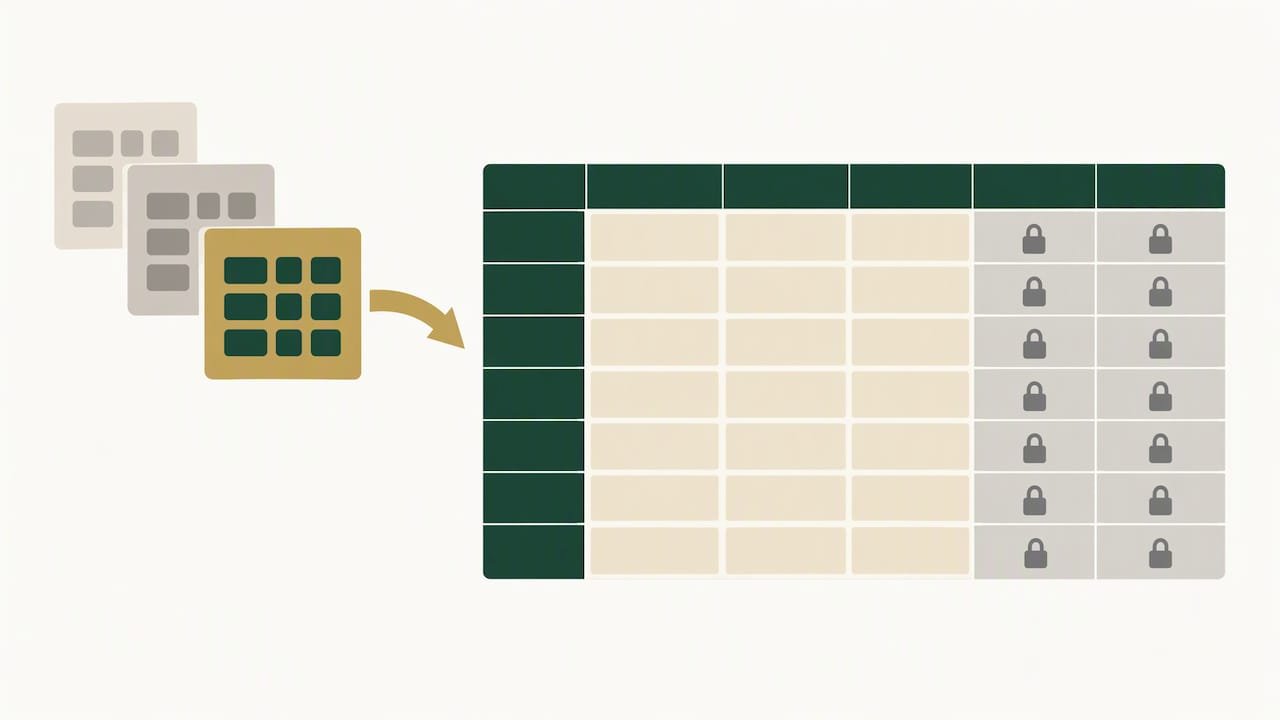
Pro Tip: Build your template once in a spreadsheet, lock the formulas, and reuse it every month so you’re only updating numbers, not rebuilding structure.
Which KPIs and nonfinancial metrics actually matter
A good KPI set is short enough to review in five minutes and specific enough to drive a decision. Most small businesses do well with four to six metrics total.
- Gross margin and net margin: Show pricing health and overall profitability after all costs.
- Current ratio and quick ratio: Measure whether you can cover short-term obligations with assets on hand.
- Days sales outstanding (DSO): Tracks how fast customers actually pay, tied directly to your AR aging report.
- Burn rate: Relevant if you’re spending down cash reserves and need to know your runway.
- Operational metrics: Conversion rate, average order value, customer acquisition cost, churn, or inventory turns, chosen based on what drives your specific business model.
Pick KPIs that connect to your top one or two business goals and that you can actually pull from existing data each month. Internal management reports work best when they pair financial KPIs with operational ones, since activities like conversion rate or production output explain why the financial numbers moved the way they did. A simple trendline with a target band, colored red, yellow, or green against threshold, makes a KPI report readable at a glance instead of requiring a spreadsheet deep dive.
Keeping your reports current and trustworthy
Reports are only useful if the numbers behind them are clean and consistent month to month.
- Standardize your chart of accounts and naming conventions so categories don’t shift between periods.
- Automate bank feeds and receipt capture, then reconcile on a fixed schedule rather than whenever time allows.
- Use a financial dashboard for daily or weekly monitoring, with alerts set on the metrics that matter most.
- Assign one person to own the monthly close and sign off before the report goes out.
- Match your tools to the job: a cloud bookkeeping platform for the ledger, a dashboarding tool for visualization, and a receipt capture app to cut down on manual entry.
What we see most often, and the fastest fix
The most common gap we see is owners watching profit closely while ignoring cash. A monthly income statement paired with a simple rolling cash forecast closes that gap fast, often within one reporting cycle, because it forces you to look at both numbers side by side instead of just the one that feels reassuring.
— Kelli
How KelliWorks sets up reporting that runs itself
We help build a reporting structure that includes bookkeeping cleanup, cash forecasting, monthly review calls, and tax preparation aligned with your reports.

Getting started is simple. You can request a consultation, review a sample report built from your numbers, and decide on a plan that suits your needs. Visit our accounting services page to see how it fits your business, or check our tax preparation and filing page if year-end filing is the more immediate need.
FAQ
What are examples of management reports?
Common examples include the income statement, cash flow statement, balance sheet, budget vs actual report, cash flow forecast, and accounts receivable aging report. Many businesses also add a short KPI summary covering margins, liquidity ratios, and operational metrics like conversion rate or inventory turns.
How to prepare a management report?
Pull data from your bookkeeping software, bank feeds, POS system, payroll records, and open invoices, then reconcile everything against your books before assembling the report. Use a consistent template with comparative columns for budget and prior period, add variance figures, and include a short written note on what drove the biggest changes.
What are the most important financial reports for a small business?
The Workday small business guide lists the income statement, cash flow statement, balance sheet, AR aging, budget vs actual, cash forecast, and key ratios as the seven essential reports. The SBA specifically points to the balance sheet as a starting point since it anchors your view of assets, liabilities, and working capital.
What is the difference between a financial report and a management report?
Financial reports are built for outside parties like lenders, investors, or tax authorities and follow standardized accounting rules. AccountingCoach explains that management reports are for internal use only, built for decisions like budgeting, cost control, and tracking KPIs, so they can be formatted however your team finds most useful.
Sources
- Manage your finances | U.S. Small Business Administration
- Top 7 Financial Reports for Small Businesses
- What is the difference between financial accounting and management accounting?