


Outsourced bookkeeping frees up owners’ time, typically lowers total bookkeeping costs compared with a full-time hire, and keeps your books ready for tax season year-round. Beyond the hours you get back, you also gain continuous reconciliation, fewer costly errors, and direct access to accounting software and expertise that most small teams can’t build on their own.
TL;DR:
- Fees usually depend on transaction volume, payroll complexity, account integrations, and historical cleanup; define deliverables and billable extras in writing before signing.
- Onboarding typically takes 30 days for setup and the first reconciliation, 30 to 60 days for stable reporting, and 60 to 90 days for historical cleanup.
- Owners remain responsible for accurate records, so require machine readable electronic backups, monthly reconciliations, and documented adjustment memos from any provider.
- Confirm advisory reviews are included, and consider outsourcing when at least two warning signs apply, such as repeated late payroll or an unclear cash position.
Table of Contents
- The Real Benefits of Outsourcing Your Bookkeeping
- What Outsourced Bookkeeping Costs and What Moves the Price
- How Outsourced Bookkeeping Works, Step by Step
- Why IRS-Ready Recordkeeping Matters Year-Round
- Signs It’s Time to Outsource Your Bookkeeping
- How KelliWorks Delivers These Benefits in Practice
- The Part of This Advice Most Owners Get Wrong
- Getting Started With KelliWorks
- FAQ
- Sources
The Real Benefits of Outsourcing Your Bookkeeping
Most small-business owners who outsource bookkeeping notice the time savings first. Data entry, receipt sorting, and bank reconciliation can easily consume substantial time each month when you’re doing it yourself after hours. Handing that off means you get those hours back for sales calls, client work, or simply closing the laptop earlier.
Cost is the second big factor, and the math tends to favor outsourcing for small operations. A full-time, in-house bookkeeper carries a salary plus payroll taxes, benefits, and the cost of accounting software licenses. Outsourced bookkeeping replaces that fixed overhead with a flat or tiered fee scaled to your transaction volume, so a one-person shop isn’t paying for the same infrastructure as a company with twenty employees.
Accuracy improves too, mainly because continuous reconciliation catches small mistakes before they become expensive ones. When your books are reconciled monthly instead of scrambled together in March, discrepancies like duplicate charges, missed deposits, or miscategorized expenses get flagged while they’re still easy to fix.
Benefits outsourced bookkeeping delivers for most small businesses:
- Hours previously spent on data entry and reconciliation get redirected to revenue-generating work.
- Continuous monthly reconciliation reduces the error rate that causes year-end surprises.
- Provider teams bring working knowledge of accounting software platforms without requiring you to buy or maintain the licenses yourself.
- Advisory insight, like flagging a cash-flow gap three months out, often comes bundled into the service rather than billed separately.
- Scalability means a seasonal surge in transactions doesn’t require you to hire and train a second employee.
Segregation of duties is a control most solo owners and small teams simply don’t have the headcount to build. When one person handles invoicing, approves payments, and reconciles the bank account, there’s no second set of eyes to catch an error or a deliberate misstatement. Outsourced bookkeeping naturally splits those functions across people and systems, which lowers the risk of unflagged mistakes or fraud.
Bookkeeping, accounting, and auditing work is also shifting as software takes over more routine data entry, pushing bookkeepers toward analysis and advisory tasks. That shift benefits you directly: the person reconciling your accounts is increasingly focused on what the numbers mean, not just on typing them in.
Pro Tip: Ask any bookkeeping provider upfront whether advisory check-ins (cash-flow reviews, expense trend flags) are included in the base fee or billed as an add-on, so you’re not surprised later.
Advisory value shows up in small, practical ways. A provider who notices your supplies expense has crept up 20% quarter over quarter can flag it before it becomes a pattern you discover in your annual review. Timely expense classification also matters at tax time: expenses coded correctly throughout the year mean your preparer isn’t guessing in April.
Access to modern bookkeeping software and dashboards is often bundled into the service fee, which means you’re not separately paying for licenses, training, or IT support to keep that software running. For a freelancer or a small team, that’s real savings on top of the labor cost difference.
Scalability rounds out the list. A retail business with a holiday surge, or a consultancy adding a second office, can lean on an outsourced team to absorb the extra transaction volume without a hiring cycle. The Small Business Administration notes that outsourcing functions like accounting helps smaller companies control costs and access expertise they couldn’t otherwise afford to keep in-house, which is exactly the flexibility that matters when your business is growing unevenly.
What Outsourced Bookkeeping Costs and What Moves the Price
Pricing for outsourced bookkeeping generally falls into three models. Hourly billing suits businesses with light, unpredictable bookkeeping needs, though costs can be harder to forecast month to month. Fixed monthly fees are the most common for small businesses because they cover a defined set of services (categorization, reconciliation, reporting) for a flat rate regardless of minor fluctuations in transaction count. Tiered pricing sits between the two, with packages that scale as your transaction volume, payroll complexity, or number of accounts grows.
What typically drives the price up or down:
- The number of monthly transactions across all bank and credit card accounts.
- Whether payroll processing is bundled in or handled separately.
- Unapplied payments or unreconciled accounts that require extra cleanup time.
- The number of software integrations (point of sale, e-commerce platforms, payroll systems) that need to sync.
- Historical cleanup work if your books were neglected before you signed on.
A single-owner freelancer with a handful of transactions a month sits at the lower end of most fee structures, while a small business with five employees, payroll, and multiple bank accounts sits higher, and a multi-entity company with several legal structures sits higher still. The gap between those scenarios is driven almost entirely by transaction volume and payroll complexity, not by the basic service itself.
Industry guidance for firms that manage bookkeeping at scale notes that the trade-offs in cost and control depend heavily on how clearly the scope is defined from the outset. That’s worth taking seriously before you sign anything. Ask for a written list of deliverables (what reports you’ll receive, how often, and what counts as “included” versus a billable add-on) so a cleanup project or a new integration doesn’t show up as a surprise invoice. You can review typical pricing structures and what affects cost before your first conversation with a provider.
How Outsourced Bookkeeping Works, Step by Step
The monthly workflow behind outsourced bookkeeping follows a predictable rhythm once it’s set up. Transactions flow in from connected bank and credit card accounts, get categorized against your chart of accounts, reconciled against statements, and rolled into a report your bookkeeper reviews with you before it’s handed to your CPA at tax time.
Getting there starts with onboarding, and a clear checklist up front saves weeks of back and forth later.
- Share a labeled chart of accounts or let your provider build one from your existing records.
- Grant secure, read-only access to bank and credit card accounts, plus payroll system access if applicable.
- Provide historical statements and any prior reconciliations so the provider isn’t starting from zero.
- Transfer existing documents (prior tax returns, loan agreements, vendor contracts) that affect how transactions should be categorized.
- Assign a single point of contact on your side to approve categorizations and answer questions quickly.
A realistic timeline runs in three phases. In the first 30 days, expect account setup, chart of accounts review, and the first full reconciliation. Between 30 and 60 days, monthly reporting should stabilize into a routine, and any obvious historical discrepancies get flagged. Full historical cleanup, if your books were neglected before onboarding, commonly runs 60 to 90 days depending on volume and how far back the mess goes, according to guidance on outsourced bookkeeping timelines for firms managing client transitions.
Pro Tip: Ask your provider to document every manual adjustment with a short memo explaining why it was made. That habit alone makes year-end CPA handoff faster and gives you a clean audit trail if you’re ever asked to produce records.
Security matters as much as speed during onboarding. Credentials should be shared through encrypted, read-only connections rather than emailed passwords, and your provider should maintain backups of your financial data independent of any single software platform. If you’re a freelancer wondering what records to keep on your own side regardless of who handles the books, this breakdown of what to retain and why is a useful starting point.
Why IRS-Ready Recordkeeping Matters Year-Round
Tax readiness isn’t something you build in March. It’s a byproduct of books that have been reconciled every month, with backups that meet the standard the IRS actually expects.
Under Internal Revenue Code Section 6001, business owners must retain accurate records and, when using electronic accounting software, be prepared to produce the original electronic backup files on request. That requirement doesn’t go away just because you’ve hired a bookkeeper. You remain responsible for your own records even when a third party maintains them, which is exactly why asking for machine-sensible backups as a standard deliverable matters.
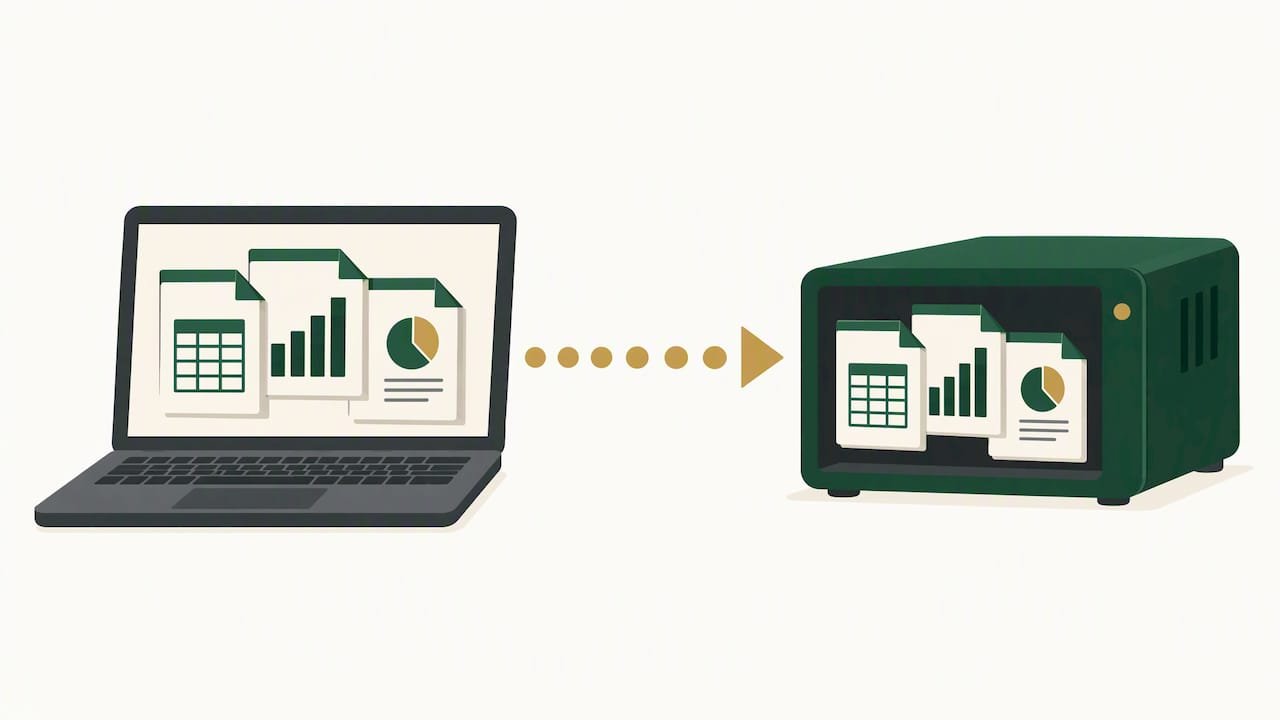
Those same electronic records work in your favor during an audit. The IRS notes that examiners prefer machine-sensible records because they reduce the volume of document requests and can speed up the entire process compared with producing paper files piecemeal.
What to request from any bookkeeping provider to stay audit-ready:
- Monthly reconciliations saved as part of your permanent record, not just a snapshot at tax time.
- Electronic backup files in a format your CPA can import directly.
- Documented memos for any manual adjustments or reclassifications.
- Segregation of duties between whoever enters transactions and whoever reviews or approves them.
Segregation of duties isn’t only a fraud safeguard. It also supports compliance, because a second reviewer is more likely to catch a misclassified expense before it shows up on a tax return.
Signs It’s Time to Outsource Your Bookkeeping
A few patterns tend to show up right before owners decide to make the switch. Missed filing deadlines, payroll that goes out late because nobody had time to run it, or a December scramble to reconstruct eleven months of receipts are all signals that the DIY approach has run out of room.
Quick checklist to decide if now is the time:
- You’re spending more than a few hours a month on data entry instead of running your business.
- Your year-end books require significant cleanup before your CPA can even start.
- Payroll, invoicing, or bill payment has been late more than once in the last quarter.
- You’re planning to hire, raise capital, or pursue an acquisition and need clean financials fast.
- You genuinely don’t know your current cash position without checking three different accounts.
If two or more of those sound familiar, outsourcing is worth a serious look rather than another quarter of patching things together yourself.
How KelliWorks Delivers These Benefits in Practice
We built our bookkeeping process around a simple idea: your books should never require a year-end scramble. For freelancers and small-business clients, we run a weekly, IRS-ready workflow that takes roughly 30 to 60 minutes a week to keep transactions categorized and reconciled, instead of letting twelve months pile up before tax season.
What that looks like in practice:
- Transactions are categorized and reconciled weekly, not quarterly or annually.
- Clients get a clear chart of accounts and close package from day one of onboarding.
- Manual adjustments are documented with memos, so the trail is clean if a CPA or examiner ever needs it.
- Handoff to tax preparation happens with reconciled, backup-ready records already in place.
As founder and accounting expert at KelliWorks, Kelli built this workflow around what actually slows small businesses down at tax time: disorganized records and a scramble to reconstruct a year of transactions in a few weeks. Clients who move to this weekly cadence consistently report faster CPA handoffs and far less year-end stress, because the heavy lifting happened in small pieces throughout the year instead of all at once.
The Part of This Advice Most Owners Get Wrong
The conventional pitch for outsourced bookkeeping leans hard on cost savings, and that’s real, but it’s not the part that actually changes how your business runs. The bigger shift is cadence. Businesses that treat bookkeeping as a monthly or weekly habit, rather than a once-a-year cleanup project, make better decisions in the moment: they catch a cash-flow dip in month three instead of month eleven, and they stop treating tax season as an emergency.
Where most advice falls short is in underselling the IRS recordkeeping angle. Owners fixate on whether a provider is cheaper than hiring internally, and skip the harder question of whether their records will hold up if examined. Reconciled books with documented backups aren’t a bonus feature. They’re the difference between an audit that takes an afternoon and one that takes weeks.
If you take one thing from this, prioritize frequency over flash. A provider who reconciles weekly and documents adjustments will serve you better than one promising the lowest fee with vague deliverables.
— Kelli
Getting Started With KelliWorks
We offer full-service bookkeeping and accounting support built specifically for small businesses, freelancers, and entrepreneurs, covering everything from monthly reconciliation and financial reporting to tax preparation and filing and business consulting. Our approach is personalized rather than templated, so the services you get match the complexity of your business.

Before your first consultation, gather your most recent bank and credit card statements, last year’s tax return, and a rough list of the software tools you currently use (point of sale, payroll, e-commerce). That lets us scope your onboarding accurately from the start. Our initial consult walks through your current bookkeeping setup, flags any cleanup work needed, and outlines a realistic timeline for getting your books current.
Ready to see what a reconciled, IRS-ready set of books feels like? Schedule a consultation and we’ll walk you through exactly what the first 90 days would look like for your business.
FAQ
What is the typical cost of outsourced bookkeeping?
Pricing varies by transaction volume, payroll complexity, and whether cleanup work is needed, with most small businesses billed through flat monthly fees or tiered packages rather than straight hourly rates. You can review typical pricing structures and what drives cost up or down before requesting a quote.
Is AI replacing bookkeepers?
No, but the role is shifting. The Bureau of Labor Statistics notes that bookkeeping work is becoming more computerized, which is pushing bookkeepers toward analysis and advisory work rather than eliminating the role outright.
What are the three golden rules of bookkeeping?
The three foundational rules cover how debits and credits apply to different account types: debit the receiver and credit the giver for personal accounts, debit what comes in and credit what goes out for real accounts, and debit expenses and losses while crediting income and gains for nominal accounts. These principles underpin double-entry bookkeeping regardless of which software or provider maintains your books.
What are the main benefits of outsourcing?
Outsourcing routine functions like accounting helps small businesses control costs and access expertise they likely couldn’t afford to build in-house, while freeing owner time for core business activities. For bookkeeping specifically, that translates into time savings, lower all-in costs compared with a full-time hire, and more consistently accurate, audit-ready records.
Sources
- Use of electronic accounting software records: Frequently asked questions and answers | Internal Revenue Service
- Bookkeeping, Accounting, and Auditing Clerks: Occupational Outlook Handbook | U.S. Bureau of Labor Statistics
- 10 small business functions that can be easily outsourced | U.S. Small Business Administration
- A Practical Guide to Outsourcing Bookkeeping for CPAs | FutureFirm



One Response